Posts

Showing posts with the label business strategy

Why negative feedback is an opportunity

Image
People look forward to getting feedback after a lot of effort has been put into a project or job. While the hope is to receive positive feedback from a boss or customer, this isn't always the way things go. It can be pretty disappointing when it happens. For many people, the initial gut reaction to negative feedback is not usually good. It's human nature to sometimes get defensive and, when negative feedback occurs, it is sometimes instinctual to have an adverse reaction to this kind of critique. However, it doesn't have to be that way. Image credit: Pixabay Turn a negative into a positive The very heart of the word "negativity" sounds pessimistic and its connotation isn't a feeling people anticipate or usually want to experience. It is often hard to accept negative feedback, even when offered as constructive criticism. If this happens to you, you can either take the negative feedback as a put-down or you can accept it at face value and use it to you...


Business advantages to giving away freebies

Image
Image credit: Pixabay Marketers have long-time considered freebies to be an attractive way to advertise. In marketing circles, this approach is considered a way to allow consumers to have the opportunity to "test drive" products (or services) they want to promote. The advantages of giving away freebies to consumers are many for the business.

Why emergency preparedness is important for small businesses

Image
Image credit: Pixabay Over the last two decades emergency preparedness for business has emerged as a prominent topic. Planning for unexpected emergencies is not a new issue, but it is one that has begun to go beyond the talking stages and brought into action by many organizations. Yet, despite this progress, there is still a long way to go. Many small businesses still do not establish a disaster plan.

Benefits of linking SOX requirements to business strategy

Image
The Sarbanes-Oxley Act was a motion made by U.S. Congress in 2002. The proposal was passed into law as a preventative means to increase financial transparency and mitigate fraud in corporate business. This law was a reaction to corporate scandals such as Enron, Tyco and WorldCom. While this law created a huge burden on organizations, many found ways to use SOX and apply it to their business strategies.

How Demings’ Plan-Do-Act-Cycle applies to today’s business environment

Image
Image credit: Pixabay In the 1950s W. Edwards Deming constructed the Plan-Do-Check-Act (PDCA) cycle. Deming developed this model on the basis of quality, and his assertion was that when processes are placed in a continuous feedback loop this increases the quality of service and products to customers.

What is the Sarbanes-Oxley Act of 2002? An overview

Image
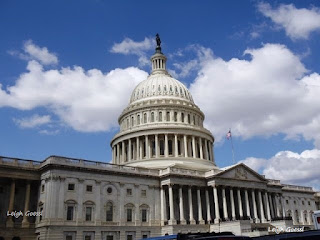
Image credit: Leigh Goessl The Sarbanes-Oxley Act was a motion by Congress to increase financial transparency and reduce fraud of publicly held companies. This law was passed immediately (2002) after a series of corporate scandals, most notably, Enron. Often referred to as "SOX", this compliance law has become deeply ingrained in the corporate sector.

Pros and cons of a limited liability company (LLC)

Image
The limited liability company is a relatively new kind of business structure in the United States, although in other parts of the world, such as Europe and South America, this type of business structure has been around for some time. Fundamentally, the limited liability company , or LLC, combines the best of other business structures to provide business owners with another kind of opportunity to structure their business.

How to pick a location for a new business

Image
The approach taken when choosing a location for a new business is one of the most important decisions an entrepreneur will make. There are several important factors to consider when determining where a new business will be opened. 

Understanding the basics of a limited liability company (LLC)

Image
There are three primary structures for a business, sole proprietorship, partnership and corporation. However, there is a fourth option called a limited liability company, or sometimes referred to as a legal liability corporation.

How strategic alliance partnerships benefit business

Image
Strategic partnerships can be very beneficial to companies that are looking to expand or meet specific objectives. In a business environment where companies have to really hone in on their strengths and minimize their weaknesses, strategic alliances make good business sense. Businesses that partner with others can use the alliance to complement their own capabilities and resources, expand leverage and get the potential to tap into both domestic and international markets they didn't have access to before.

Ways organizations work to prevent financial fraud

Image
Financial fraud is an issue highlighted in the 21st century, particularly after scandals which arose from companies such as Enron, Tyco, and WorldCom and others that subsequently rocked society when news of these incidents hit the media.

5 ways to attract and retain customers

Image
Many business owners would give their eye teeth to fully know the secrets to keeping customers. Customers are heart of any business, as it is their patronage that enables a company to remain operational.

Reasons to include an exit strategy in your business plan

Image
An exit strategy is a valuable component of a business plan. While it perhaps sounds strange to plan for the end at the time of beginning a company launch, there are many solid reasons for outlining a specified business timeline right from the beginning.